A skin patch that feels numb. A swelling that does not hurt. An itch that interrupts sleep. These experiences may seem unrelated, yet each can be a reason to seek care. Some skin changes are linked to neglected tropical diseases, or NTDs, a group of conditions whose impact reaches far beyond the skin.
What makes a disease “neglected”?
NTDs have historically received limited attention on the global health agenda despite serious health, social, and economic consequences. They disproportionately affect communities facing poverty, and many occur in tropical areas. Some have a much wider geographic reach. “Neglected” describes a failure of attention and access; it does not describe the worth of the people affected. [1]
Skin NTDs are NTDs that can affect the skin. They are not one infection, and they do not all spread in the same way. Understanding those differences helps replace fear with accurate information.
Four examples worth knowing
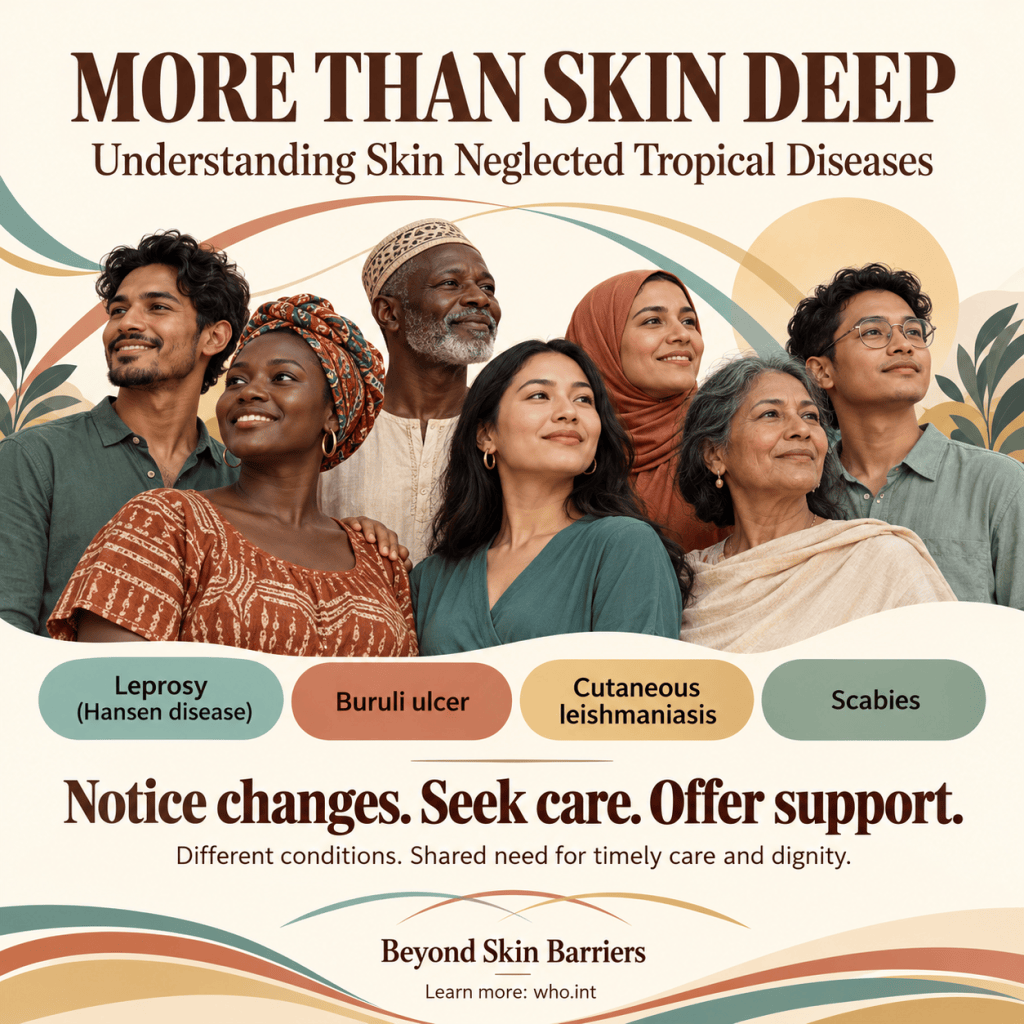
Leprosy, also called Hansen disease: This bacterial disease affects the skin and peripheral nerves. A skin patch with reduced sensation can be an important sign. Untreated disease may lead to lasting disability, but leprosy is curable with multi-drug therapy. Early treatment can help prevent disability. WHO states that casual contact, such as shaking hands, hugging, or sharing meals, does not spread leprosy. [2]
Buruli ulcer: Caused by Mycobacterium ulcerans, this infection may begin as a painless lump or swelling and develop into an ulcer. Lack of pain does not mean lack of harm. Early detection and antibiotic treatment are central to reducing disability. WHO’s fact sheet notes that the exact route of transmission remains unknown. [3]
Cutaneous leishmaniasis: Transmitted by infected sandflies, this parasitic disease commonly causes skin ulcers and can leave lasting scars. It occurs in multiple regions, including the Americas, Africa, and parts of Asia. Treatment depends on factors such as the parasite species and location of infection, so there is no single treatment appropriate for every case. [4]
Scabies: Tiny mites burrow into the skin and cause intense itching, often worse at night. Scabies can affect people worldwide and spreads mainly through close skin contact. It is treatable; coordinated treatment of household contacts is important to prevent re-infestation. [5]
The burden includes how people are treated
Visible skin changes can expose people to stigma and exclusion. WHO highlights the links between NTDs, pain, disability, stigma, and mental-health difficulties. An effective response must consider emotional well-being and social participation alongside physical treatment. [7]
Our communication should reflect that principle. Use “people affected by leprosy” rather than labels that reduce someone to a diagnosis. Ask permission before sharing a story or photograph. Listen to the person’s priorities instead of assuming what support they need.
One doorway into care, several kinds of support
WHO promotes an integrated approach: shared community education, training, disease mapping, and monitoring, with services such as wound care, disability prevention, and rehabilitation where appropriate. Integration means connecting services around people while preserving the disease-specific knowledge needed for diagnosis and treatment. [6]
For students and advocates, this offers a practical direction. Support locally led education, help research teams organize evidence, and ask community partners what would make care easier to reach. A useful project might examine referral barriers or evaluate whether an educational resource answers the questions people actually have.
Awareness should open a door
The goal of skin-NTD education is to make informed care and respectful support easier to find. A skin change is a reason for attention, not a reason for exclusion. Beyond Skin Barriers can help keep that message visible through accessible, evidence-informed communication.
Disclaimer: Educational information only. These examples cannot diagnose a skin condition. Persistent or changing symptoms should be assessed by a qualified healthcare professional.
Sources
[1] WHO: Neglected tropical diseases
[2] WHO: Leprosy
[5] WHO: Scabies


Leave a Reply